
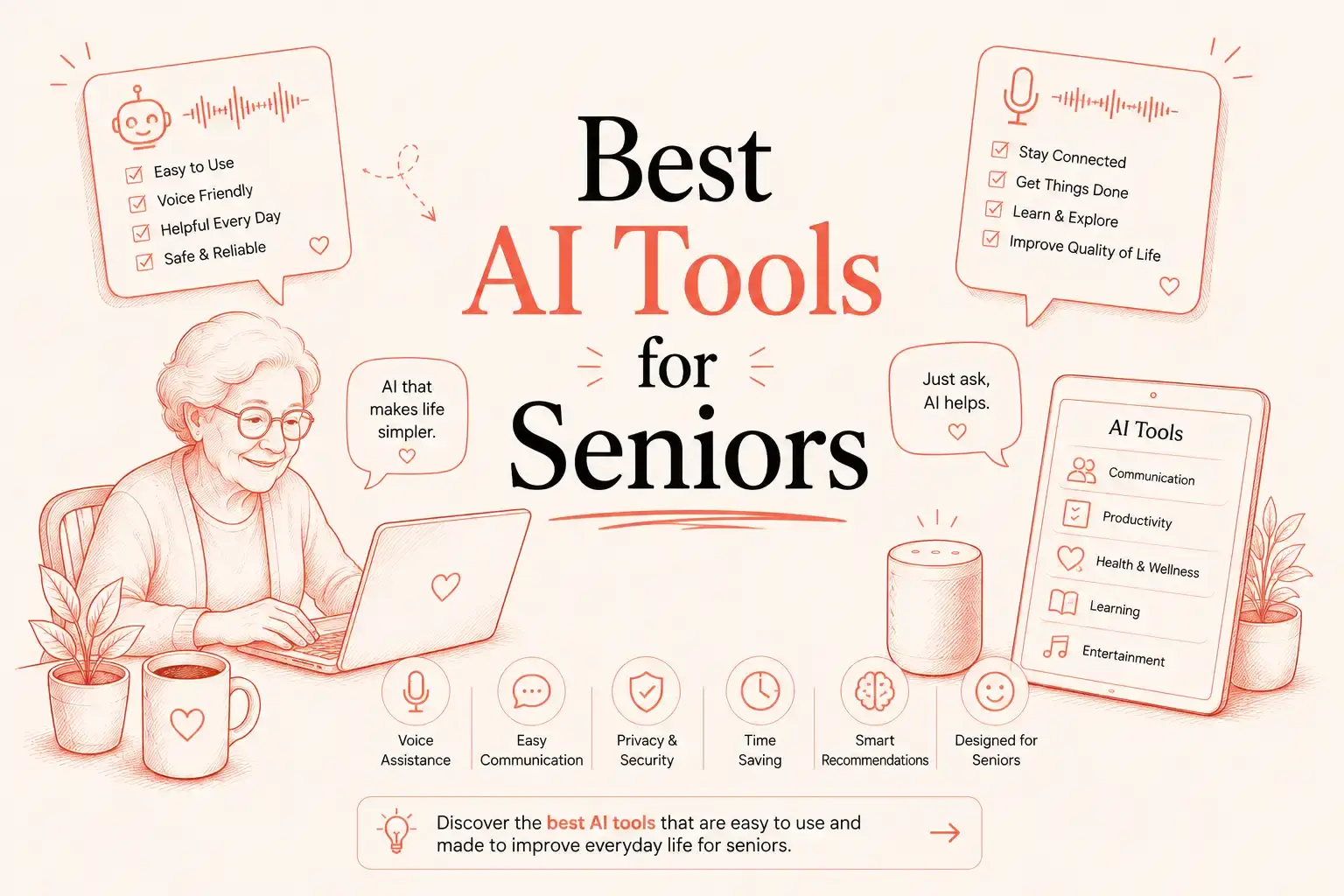
Best AI Tools for Seniors That Actually Solve Daily Struggles
If you think artificial intelligence is just for tech-savvy teenagers or Silicon Valley coders, think again! Today, AI is quietly revolutionizing something much more important: how older adults live, thrive, stay financially empowered, and maintain independence.
What Are the Best AI Tools for Older Adults?
The best AI tools for older adults include ChatGPT and Google Gemini for daily search, Voicedash for hands-free voice dictation, AgeWiser and BrainCheck for health monitoring and fall prevention, ElliQ for companionship, and SeniorSafe for cybersecurity. These assistive AI technologies help seniors preserve independence, prevent fraud, and simplify everyday digital tasks.
How to Get Started with AI for Seniors
If you’re exploring artificial intelligence for the first time or helping an aging love one get started, ignore the complicated software setups. Nobody needs a degree in computer science to make this work. Instead, you can simply follow this simple 3-step action plan to use AI safely and comfortably:
Step 1: Start with a Free Universal Assistant
Boot up a free platform like ChatGPT or Google Gemini. Don’t overthink your phrasing. Just speak or type like you’re talking to a friend:
“What is a simple, healthy recipe I can make with chicken and rice today?”
“How do I turn on my phone’s Bluetooth?”
(Using an iPhone? You can lean on Siri and Apple Intelligence right out of the box.)
Step 2: Eliminate Typing Fatigue (For Good)
Let’s be real: tiny touchscreens and physical keyboards are a nightmare when arthritis or joint pain recurs. That’s where Voicedash comes in.
Activate it, speak at your natural pace, and it turns your voice into clean, structured text anywhere a cursor blinks. No sore thumbs required.
Step 3: Put Up an Instant Shield Against Fraud
Online scams are getting trickier every day, but keeping your device secure doesn’t have to be complicated.
- Block robocalls: Set up automated screening tools like SeniorSafe to catch spam callers before your phone rings.
- Verify before clicking: Received a sketchy text about a locked bank account? Forward suspicious messages directly to verification platforms like SeniorShield.ai to check for threats instantly.
Comparison: Top AI Tools for Seniors at a Glance
Trying to figure out which AI tool actually fits your needs as an older adult? You don’t need to test dozens of complex apps. Here is how the best AI software for older adults stacks up in 2026:
| Category & Need | Tool Name | Primary Function | Platforms | Pricing | Best Use |
|---|---|---|---|---|---|
| General Assistance & Search | ChatGPT / Google Gemini | Universal problem-solving, planning, and content generation | Web, iOS, Android | Free / $20/mo Pro | Everyday Q&A, drafting notes, and general brainstorming |
| Apple Ecosystem Integration | Siri & Apple Intelligence | Native on-device assistant, writing polish, and hands-free control | iOS, iPadOS, macOS | Free (Built-in) | Hands-free control and smart reminders without apps |
| Typing Relief & Dictation | Voicedash | Fast, effortless voice-to-text dictation without manual keyboard strain | Windows, Mac, Mobile | Free trial / Paid | Dictating emails, letters, and text messages comfortably |
| Advanced Health & Fall Prevention | AgeWiser | AI-driven anomaly detection in daily activity to proactively detect mobility changes and help identify fall risks and monitor mobility | iOS, Android | Free / Subscription | Tracking daily gait and movement anomalies for safety |
| Medication & Vital Tracking | Medisafe / RM2.ai | Precise pill reminders, drug interaction alerts, and vital sign monitoring (blood pressure/glucose) | iOS, Android | Free / Premium tiers | Managing complex multi-pill schedules and vitals |
| Cognitive Health & Early Decline | BrainCheck | Early detection and tracking of cognitive health changes | iOS, Android, Web | Free trial / Paid tier | Routine cognitive assessments and memory tracking |
| Sensory Assistance | Be My Eyes | AI-powered visual assistance for reading medicine labels and navigating surroundings | iOS, Android | Free | Reading small print, expiration dates, and package instructions |
| Medical Transcription | Otter.ai | Real-time transcription and summary of doctor consultations and medical visits | Web, iOS, Android | Free / Paid tiers | Recording and reviewing physician instructions accurately |
| Specialized Companionship | ElliQ / Hyodol / SeniorTalk | Empathy-driven AI voice companions with memory retention, custom personas, and phone call support | Dedicated Hardware / Phone / Web | Subscription | Combating loneliness and managing daily wellness routines |
| Cybersecurity & Scam Protection | SeniorSafe / SeniorShield.ai | Interception of live robocalls, deepfake voice cloning, text phishing validation, and browser safety | Android, iOS, Web, Chrome Extension | Free / Paid options | Blocking scam calls and flagging dangerous phishing links |
AI Digital Assistants for the Elderly in Action
Look, let’s be honest for a second: AI is rewriting how older adults live, work, and refuse to be sidelined. AI tools are actually giving the elderly people their independence back, building real confidence, and keeping them from being treated like helpless victims.
General & Universal AI for Elderly Individuals
Not all artificial intelligence platforms serve the same purpose. That is why understanding the nuances of general-purpose language models helps older adults and their family caregivers choose the exact software tool that fits their daily hardware and user workflow:
- ChatGPT (The Universal Favorite): Widely recognized as the most flexible general-purpose assistant, excellent for drafting correspondence, explaining complex legal or medical documents, and general brainstorming.
- Google Gemini: Deeply integrated into the mobile operating system ecosystem, making it the most seamless option for seniors using Google-powered smartphones or tablets.
- Claude (The Safety-First Writer): Known for its nuanced, polite, and safe conversational style, perfect for sensitive queries or calm reading assistance.
- Siri & Apple Intelligence (The Apple Native Choice): Essential for iPhone, iPad, and Mac users, offering hands-free voice control, natural text generation, and private on-device intelligence without downloading third-party applications.
Independence at Home & Frictionless AI Voice Communication for Seniors
Loss of personal independence and social isolation are top psychological anxieties for older adults navigating aging in place.
Physical limitations should never mean losing touch with the world:
- Smart Home Automation: Control lighting, room temperatures, and home security using natural conversational speech via Amazon Alexa, bypassing complex touchscreens through a reliable voice-activated smart home setup.
- Strain-Free Typing with Voicedash: Standard physical keyboards haven’t changed, but human joints do. When typing feels like an endurance test, Voicedash speech-to-text dictation lets mature users speak naturally, generating polished, structured text anywhere on screen. Learning how to take notes faster makes it even easier to keep reminders, letters, and to-do lists organized without ever touching a keyboard.
Technology should adapt to the user, not the other way around. Voice AI removes tech friction entirely. Instead of typing, a senior can simply use natural voice commands: “Remind me to take my prescription medicine at 8 PM.”
Advanced Health, Fall Prevention, and Predictive Wellness AI for Elderly Individuals
Managing physical well-being goes far beyond simple pill reminders. Modern senior care technology leverages predictive intelligence and ambient sensors to safeguard health before emergency medical situations occur:
- Fall Prevention & Mobility Tracking: Apps like AgeWiser utilize machine learning algorithms to track daily movement patterns, flagging subtle irregularities in gait or physical exercise routines to proactively prevent falls and flag early mobility risks.
- Vital Sign & Medication Coordination: Advanced healthcare platforms monitor blood pressure, hydration levels, and complex multi-pill schedules, reducing human error and keeping family caregivers informed in real-time.
- Cognitive Health Support: Built-in brain training games and adaptive conversational interaction styles help monitor cognitive sharpness and helps monitor cognitive changes.
Cognitive Health & Early Decline Detection with AI
As cognitive wellness and brain health become top priorities, proactive tracking tools bridge the gap between home care and professional clinical oversight.
Platforms like BrainCheck provide clinically validated, engaging cognitive assessments that seniors can easily complete on a tablet or smartphone device.
These digital tools track memory retention, executive function, and reaction times over time, spotting subtle cognitive changes early and offering peace of mind to both older adults and their families.
Remember: These tools should not replace professional medical advice, diagnosis, or treatment.
Specialized Companionship & Beating Isolation for Aging People
Living alone can introduce long, quiet hours and profound loneliness.
While artificial intelligence can never replace genuine human family bonds, specialized companion platforms bridge the gap when loved ones are away:
- Dedicated Robotic & Voice Companions: Interactive hardware devices like ElliQ and Hyodol proactively initiate check-ins, encourage gentle physical stretches, and establish healthy daily routines.
- SeniorTalk & Multi-Persona Support: Platforms like Senior Talk provide empathetic voice or text conversations across WhatsApp, SMS, or direct phone calls, featuring customizable chatbot personas (ranging from a supportive listener to a historical enthusiast) to match a senior’s exact personality.
- Audio Companions: For seniors who want warm, conversational support without bulky hardware or expensive subscription hubs, lightweight voice solutions like Sentai and JunoDost offer streamlined, budget-friendly audio check-ins and daily reminders directly through standard mobile phones.
Cybersecurity AI Tools for Older Adults: Guarding Against Scams & Fraud
Senior citizens are prime targets for sophisticated phishing schemes, fake banking alerts, and voice cloning fraud.
Having accessible cybersecurity for seniors and robust anti-phishing protection is necessary:
- Automated Call Screening & Mobile Protection: Specialized apps like SeniorSafe replace standard smartphone dialers, while mobile-first security frameworks provide comprehensive, on-the-go threat defense, utilizing predictive AI to may help detect suspicious calls before money or personal data changes hands.
- Text & Email Validation: Platforms like SeniorShield evaluate fraudulent indicators and test scam awareness through interactive safety simulations. Browser-focused safety additions proactively flag malicious web links and fraudulent phishing landing pages in real-time. Seniors can also improve their daily browsing experience with the best Chrome extensions for productivity, helping them organize tasks, save time, and navigate the web more efficiently.
- On-Demand Chat Checks: Conversational AI models (ChatGPT or Claude) can function as real-time security guards. If a suspicious text message about a locked bank account arrives, copy and paste it into the chat interface and ask: “Is this message a scam?”
Economic Empowerment: Monetizing Experience with AI
Wisdom and decades of professional career experience are valuable financial assets.
Far from just receiving care, many mature adults and retirees are leveraging generative AI to generate secondary income:
- Consulting & Freelancing Gigs: Online platforms and digital guides show how seasoned professionals over 50 use AI proposal writers and business workflow tools to launch high-paying fractional executive, corporate compliance, or operational efficiency consulting roles.
- Practical Proposal Writing Example: A retired corporate executive can prompt ChatGPT with a framework like: “Act as an expert business consultant. Write a professional, 1,000-word consulting proposal for a mid-sized logistics firm detailing how my 30 years of supply chain experience can optimize their inventory workflows and reduce vendor friction by 20%.” This produces a polished draft ready for final human customization.
- Digital Products & Writing: AI helps seniors translate deep institutional knowledge into digital products, structured ebooks, or tailored translation services, creating flexible secondary revenue streams.
Global Trends: How Different Countries Use AI for Older Adults
Let’s face it: Every nation on Earth is dealing with an aging population. But they’re not all tackling it the same way. In fact, different countries are building radically different AI tech based on their local culture, privacy laws, and budget constraints. Here’s a quick breakdown of how top nations are putting artificial intelligence to work for seniors:
1. Germany: Privacy-First Home Monitoring AI for Older Adults
Germany cares about data security more than almost anything else. Because of this, German developers avoid invasive cameras entirely. Instead, they rely on ambient wall sensors and local voice units. These smart systems quietly track daily movements, spot fall risks, and call for emergency help; all without breaking strict privacy regulations. Smart, safe, and private.
2. China: Connected Smart Elder Care
China is taking a massive, network-wide approach. Here’s how it works: They link smart home sensors directly into regional health networks and municipal care systems. This allows health workers to track vital signs from a distance, schedule doctor visits, and fire off instant alerts to local caregivers if something goes wrong.
3. Japan & South Korea: Social Robotics & AI Companions for Seniors
Both Japan and South Korea face severe caregiver shortages. Their fix? Robotics.
They developed interactive companions like PARO, Lovot, Pepper, Hyodol, and SK Telecom’s NUGU Care. These aren’t just gadgets. They talk with seniors, prompt light physical exercises, and may provide companionship and engagement during quiet hours.
4. Spain: Interactive Socialization Robots for the Elderly Individuals
Spain is currently running real-world trials with specialized care robots in residential homes. Take Sandi (powered by Misty Robotics), for example. It acts like a friendly, interactive roommate, reminding seniors to take their pills, running quick memory games, and keeping up light conversation throughout the day.
5. India: Low-Cost, Voice-First Assistive AI Tech for Seniors
India focuses on making technology affordable and easy to use on cheap smartphones. With hundreds of regional dialects spoken across the country, developers there rely heavily on hands-free voice controls. They build simple, low-cost health tracking and fall-detection tools that work without needing thousands of dollars in fancy hardware.
The Bottom Line
Artificial intelligence shouldn’t feel like an intimidating tech demo you’re forced to sit through.
If a digital tool doesn’t make an older adult’s day measurably easier, safer, or more connected, delete it.
Start small: if a strange phone call comes in, rely on built-in detectors like SeniorSafe; if physical typing hurts, turn on Voicedash; if mobility tracking matters, explore AgeWiser.
Technology should serve human lives, not the other way around.


Anonymous
09/21/2026Hey, my grandma’s dementia n she keeps forgetting to take her meds. I set alarms for her and everything but it just doesn’t work. She’s an iPad Pro M5, any app you’d recommend? Honestly it’s been really tough watching her like this n’ thanks for the great article
Sahar Haghshenass
09/21/2026I’m really sorry you’re dealing with this. ❤️ Medication management isn’t really our specialty, but I did look into a few options that might be more helpful than regular alarms.
Since she’s using an iPad, you could look into DoseAlert, Doserra, or MyTherapy. DoseAlert has caregiver alerts, while Doserra has a care mode and medication tracking for loved ones. MyTherapy is another option with medication reminders and tracking.
I’d also recommend asking her doctor or pharmacist if they have a medication-management system they recommend for someone with dementia, especially if missing or doubling a dose could be dangerous.
I really hope one of these makes things a little easier for both of you.